Vous devez activer les cookies pour accéder à ce site.
Market
Select a market
Maintenance
October 8, 2025
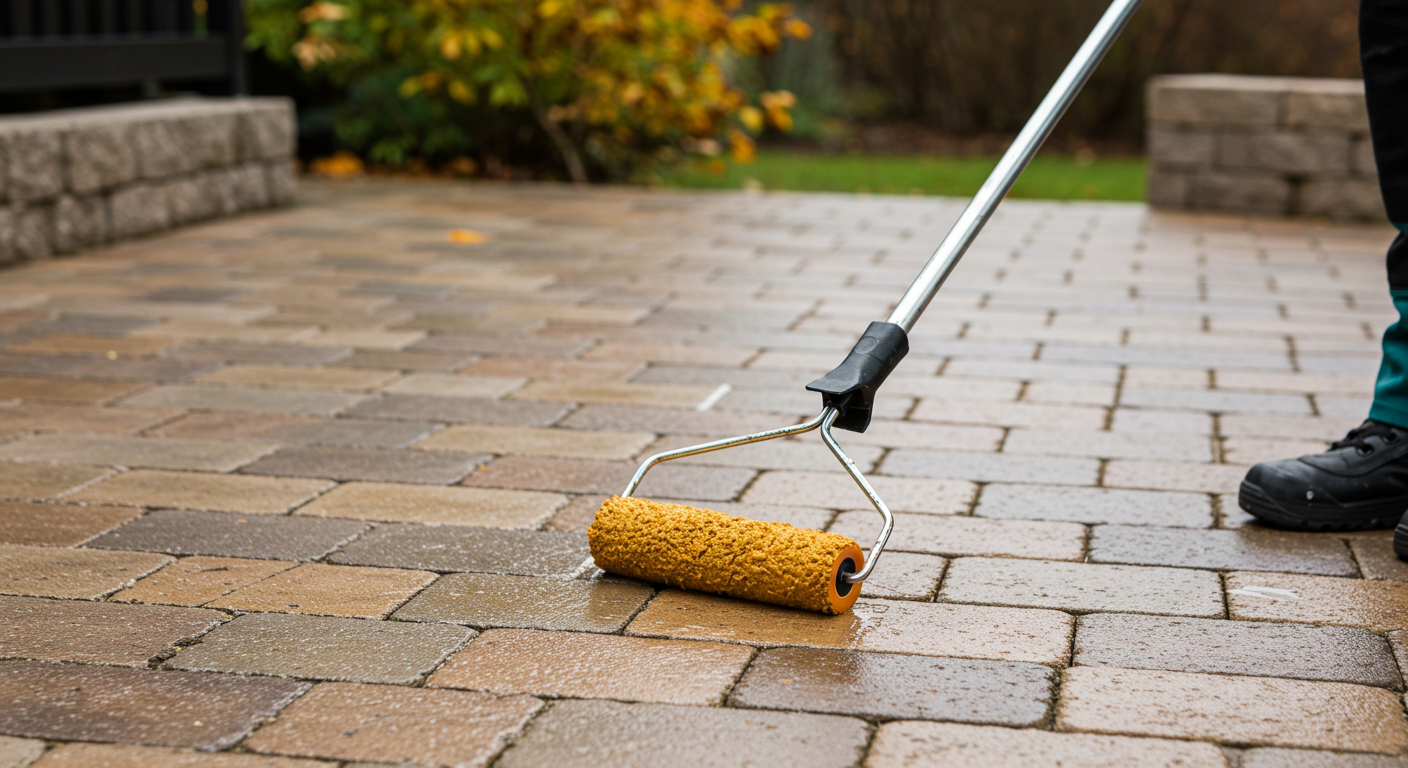
Back to articlesA sealer is a liquid product applied to the surface of concrete pavers or slabs to protect them from stains, de-icing salt, UV rays, moss, and dirt. It acts as a protective barrier.
Why apply it? To extend the lifespan of your installations, preserve their appearance, and reduce the absorption of contaminants. Essentially, it makes cleaning easier but does not eliminate the need for regular maintenance.
Contrary to popular belief, sealers are not a recent innovation. Their use first developed in industrial and municipal settings (parking lots, infrastructure, curbs) before being adapted for residential surfaces. However, today’s products are far more efficient, eco-friendly, and specialized than those from 20 years ago.
Manufacturers have helped professionalize the field by developing water-based sealers that are less harmful to the environment, provide long-lasting protection, and respect the natural texture of concrete products. Many formulations now allow easy, quick application by homeowners, whereas it once required a professional.
Sealers are designed for:
Some surfaces should be tested before application.
Application:
Frequency:
A good residential sealer protects for 2 to 5 years, depending on wear, sun exposure, and de-icing salt. High-traffic areas (driveways, pool surrounds) may need more frequent reapplication.
Confirmed benefits:
Points to note:
| Type of Sealer | Finish | Base | Main Use | Key Advantages |
|---|---|---|---|---|
| Natural water-based | Invisible | Water | Discreet protection | Preserves natural appearance |
| Satin | Semi-gloss | Water | Driveways, patios | Revives colors, wet look |
| Gloss | High-gloss | Solvent | Decorative surfaces | Rich, high-contrast effect |
| Preparer | None | Water | Before sealer application | Cleans and opens pores |
| Specialized stain-resistant | Invisible | Water | Outdoor kitchens, BBQ | High oil resistance |
| Criteria | Without Sealer | With Water-Based Sealer | With Gloss Sealer |
|---|---|---|---|
| Water absorption | High | Low to moderate | Very low |
| Stain protection | Low | Medium to high | High |
| Appearance | Natural (matte) | Natural with wet look | Glossy, saturated colors |
| Maintenance | Frequent | Reduced | Reduced |
| Durability (years) | 10–15 (not guaranteed) | 12–18 | 15–20 |